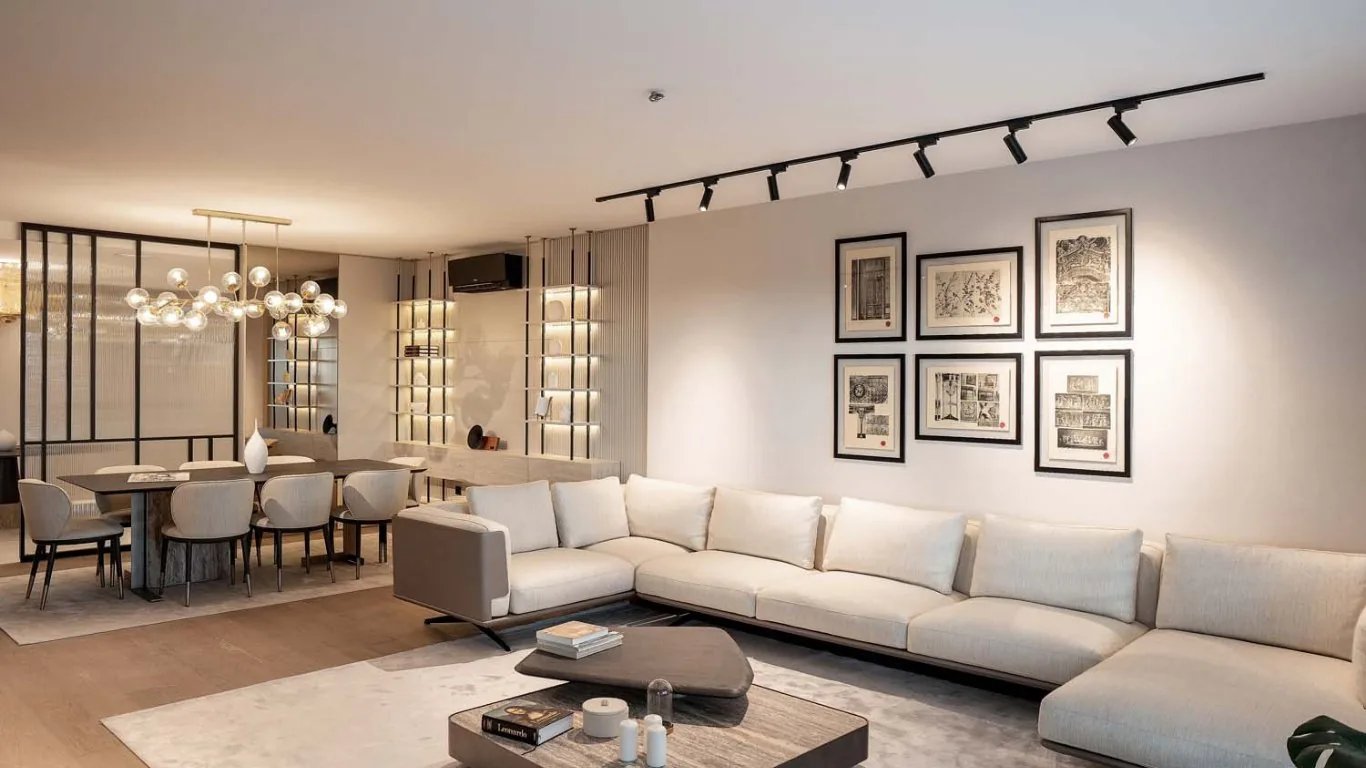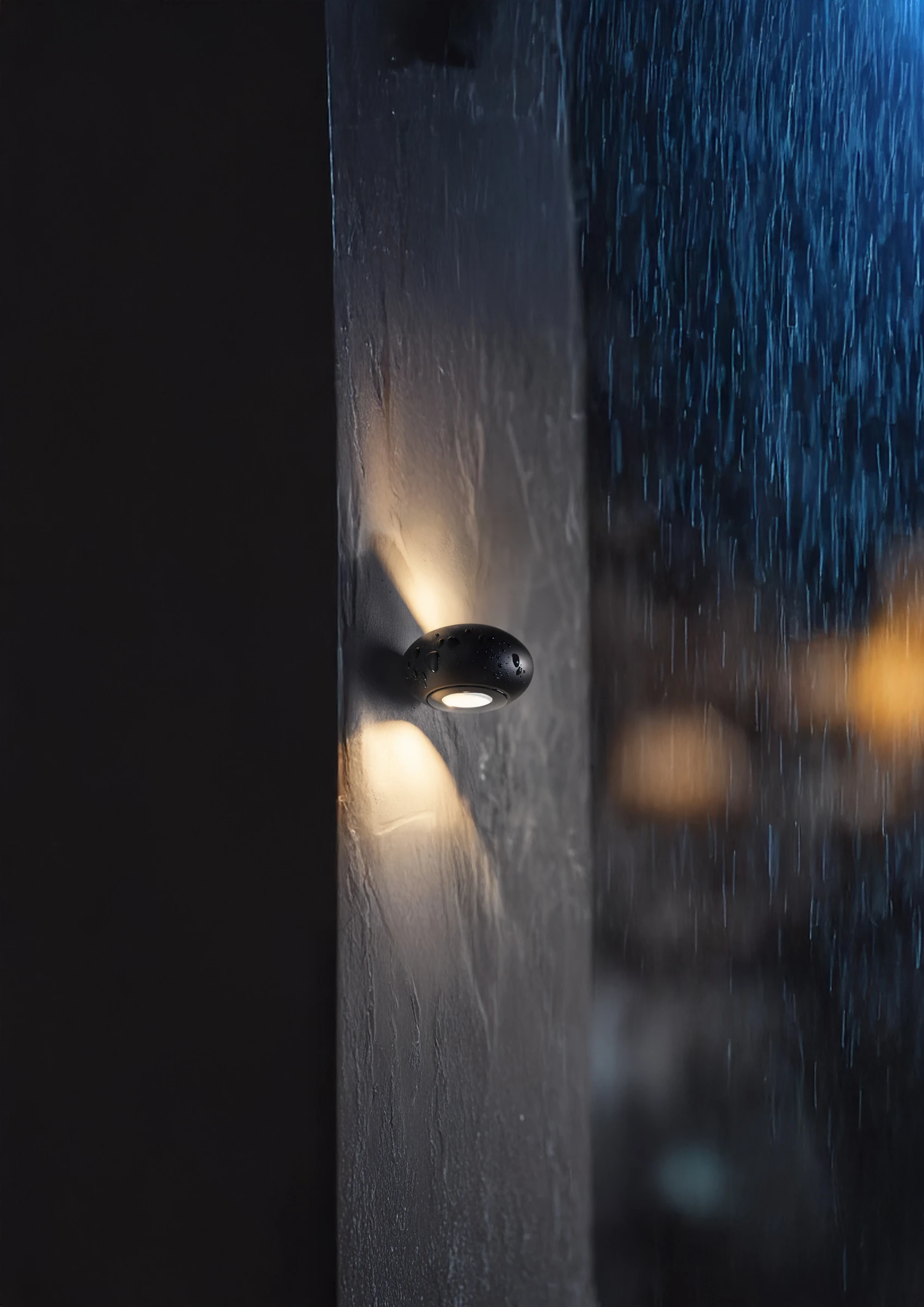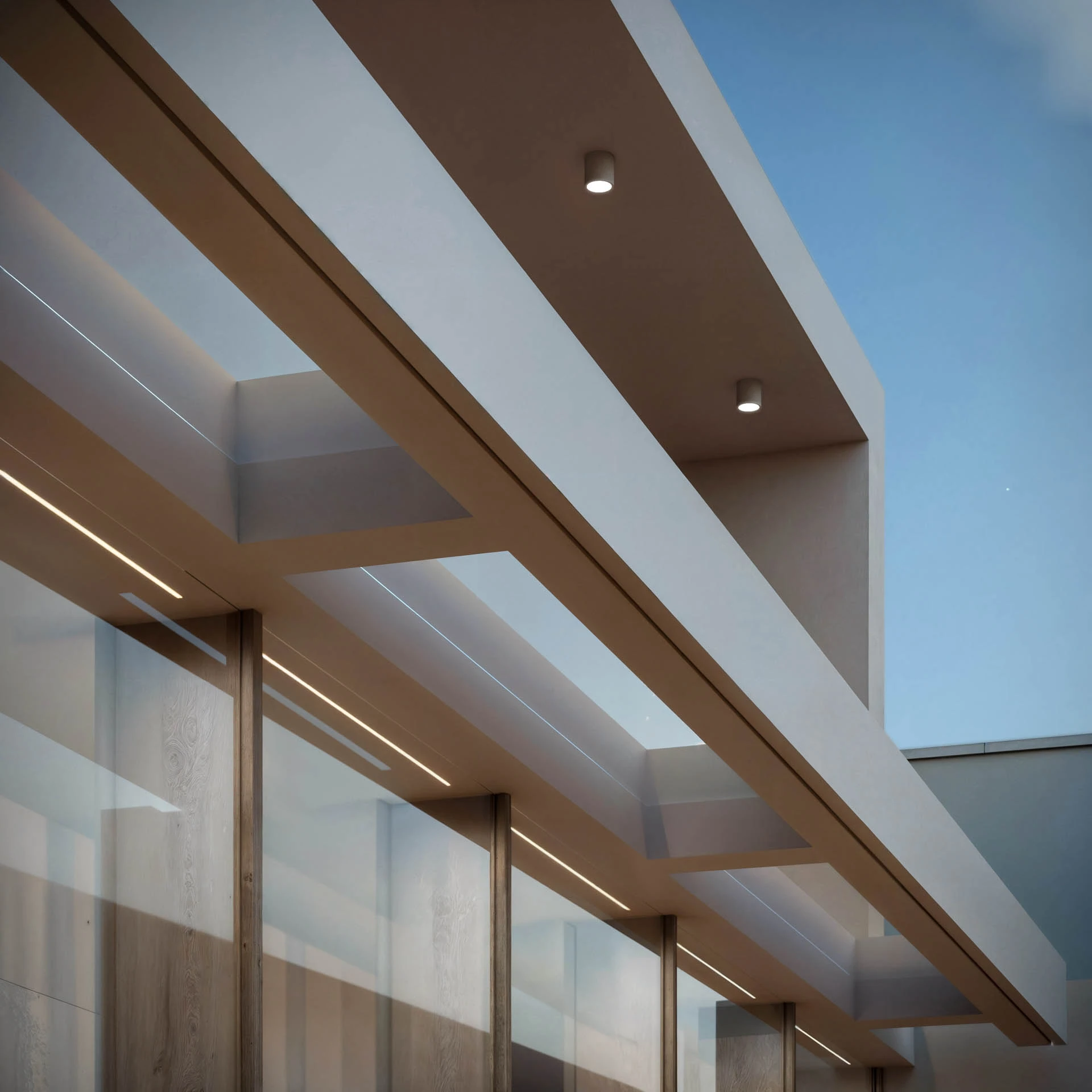
Outdoor lighting does more than make a space visible: it sets the atmosphere, underwrites safety and completes the architecture at night. The single most consequential choice is colour temperature — the tone of the light, measured in Kelvin. Low values (2700–3000K) give a warm, golden light; high values (5000–6500K) turn white-blue; 4000K sits between as neutral white.
Warm white: gardens and landscape
For planting, terraces and resting areas, choose 2700–3000K. Warm tones render greenery vivid and natural, feel inviting rather than municipal, and flatter stone and timber. This is the tone of hospitality — the reason garden restaurants glow the way they do.
Neutral white: paths, parking, façades
Walkways, parking areas and security-driven façade lighting are best served around 4000K: enough clarity for confident movement and camera systems, without the harshness that cool light brings to a home's surroundings.
Cool white: purely functional zones
5000K and above belongs to commercial yards, industrial sites and sports grounds — places where alertness and maximum visual field outrank atmosphere.
Why it matters
Tone changes more than looks: it shifts perceived safety, energy use and comfort. Too cool around a residence feels hostile; too warm on a working yard hides detail. Match the Kelvin to the job each zone performs — and keep neighbouring zones within one step of each other, so the night scene reads as one composition.