A bedroom is used lying down, which changes every rule of lighting. A ceiling spot that is invisible from a chair shines straight into the eyes of someone on a pillow. So the bedroom is designed from the bed outwards: first the light you read by, then the light you see the room by, and last the light you dress by.
The bedside: a narrow beam on the page
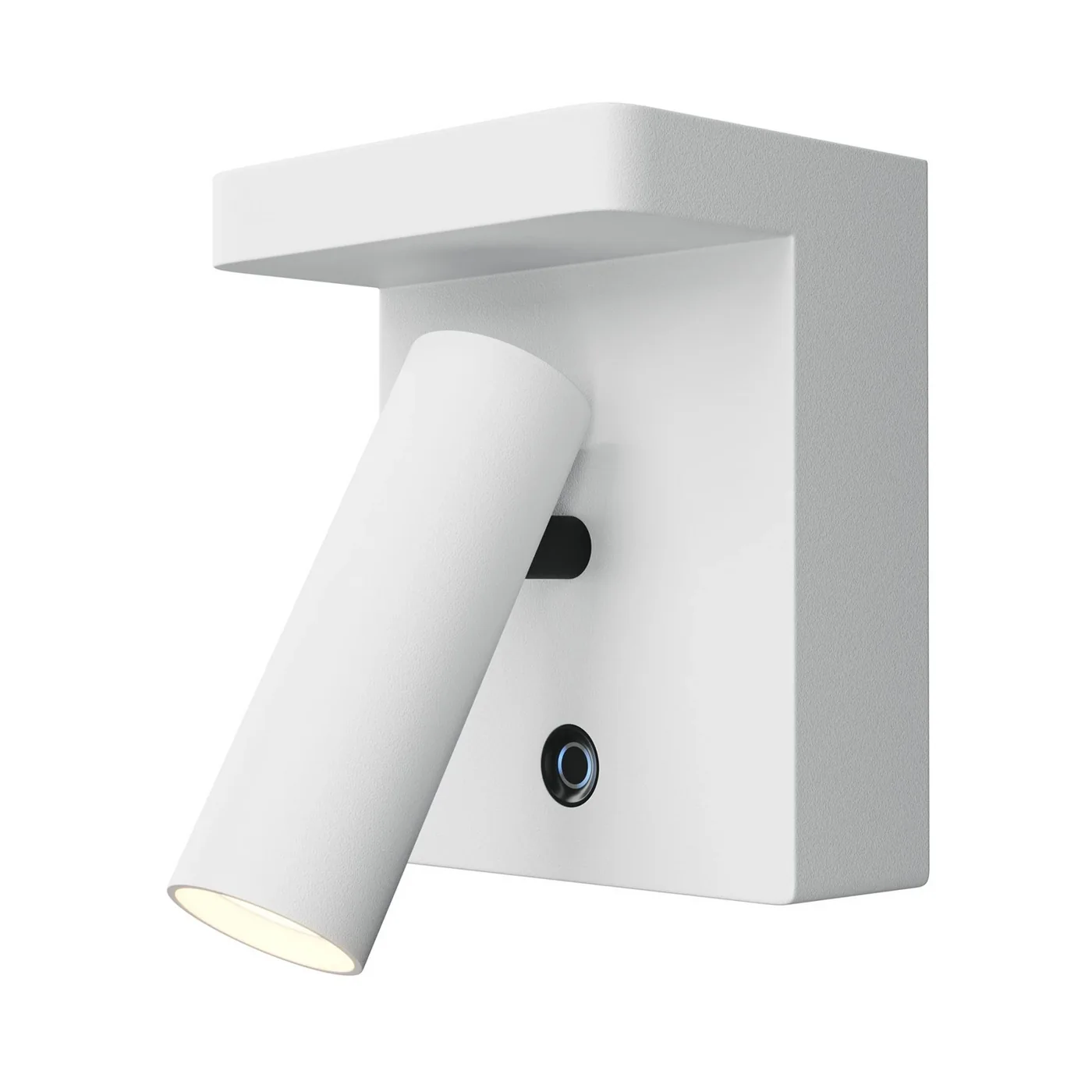
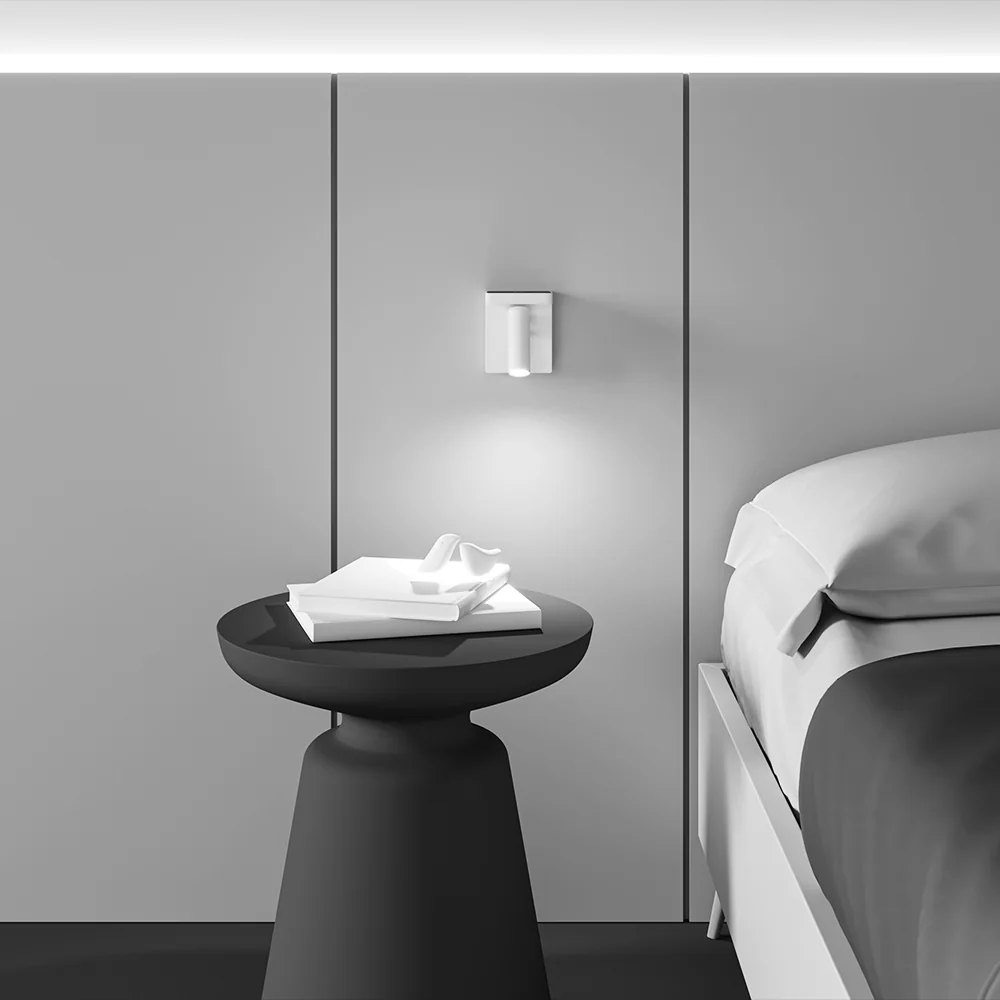
A reading light has one job — light on the book and none on the person asleep beside you. That takes a narrow beam on an adjustable head, not a shaded lamp. The Dock reading light is a 7 W head only Ø 30 × 90 mm with a 30° beam and CRI ≥90, mounted on a wall box beside the bed; it is offered at 3000 K with 2700 K as an order option for those who want a warmer light at night. Mount the wall point 1.1 to 1.3 m above the floor, about 20 cm outside the edge of the pillow, with its own switch within arm's reach.
Or a pendant instead of a lamp
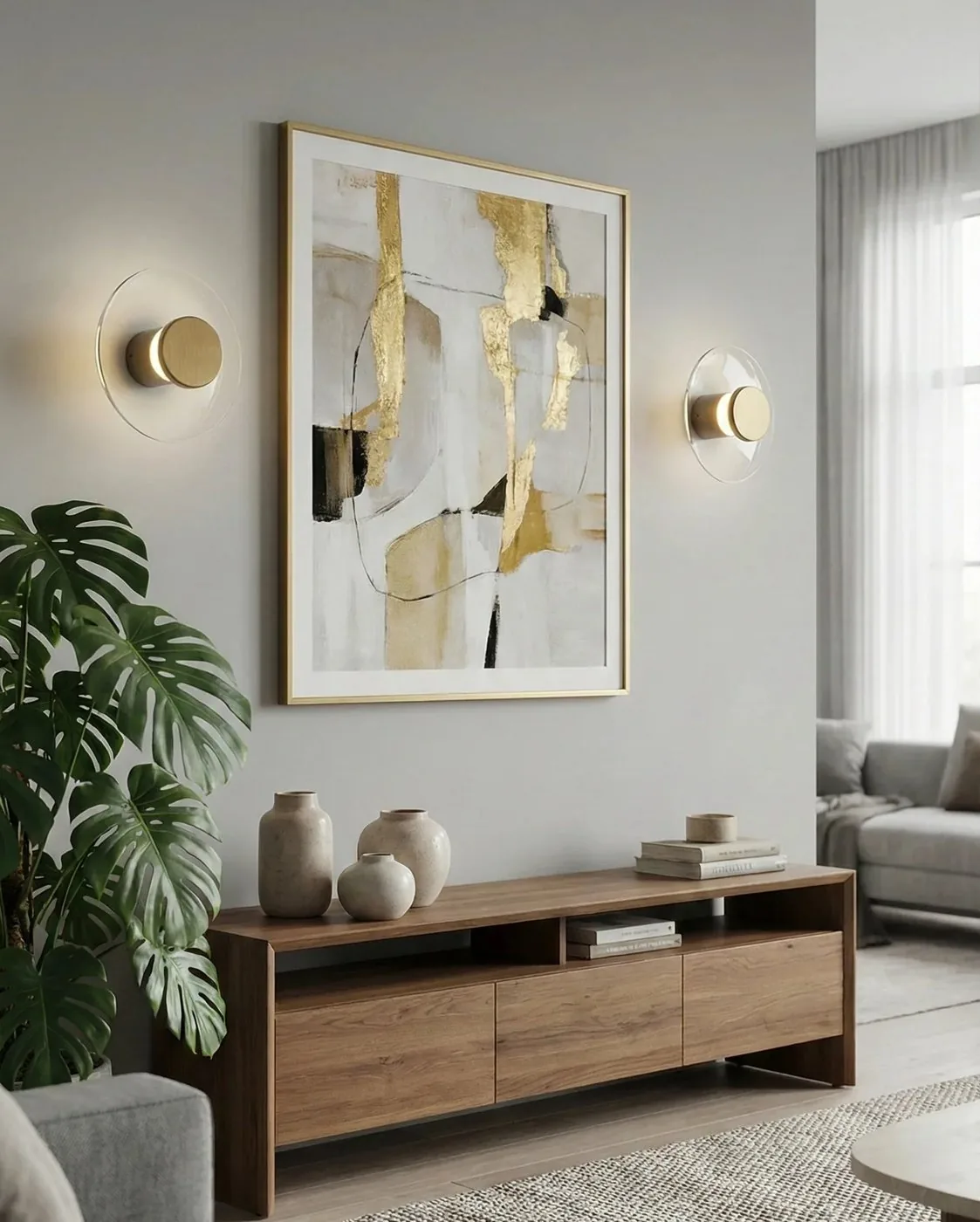
Where the bedside table is small, hang the light and free the surface. A slim pendant with a 25° beam, such as Petal at 10.5 W in 2700 or 3000 K, hung so its lower edge is 50–60 cm above the table top, gives a pool of light for reading and leaves room for a book and a glass. Wire each side separately. A pair of small backlit wall discs either side of the headboard does the gentler job of lighting the wall behind you without putting any light on the page at all.
The ceiling: nothing above the pillow
Keep recessed spots out of the zone above the bed; place them along the foot of the bed and in front of the wardrobe instead, where a lying person does not look into them. Where a spot must sit within view, choose the deepest optic you can: the Pin spot has an 18 mm aperture and a UGR below 4 at 22° on the 6 W size, which is as close to invisible as a ceiling light gets. A single shallow ceiling disc or a pleated pendant at 2700 K is the softer alternative for the general layer.
The wardrobe and the mirror
Dressing is the one task in a bedroom that needs real light: 300 lx on the clothes and on your face, with CRI ≥90 so navy and black can be told apart. Put spots 60–80 cm in front of the wardrobe doors with a 36° beam so the light falls on the clothes, not behind your head. At a full-length mirror, light the person rather than the glass — a wall light or a vertical light on each side at face height is better than anything from above.
Colour temperature and the last half hour
A bedroom is where warm light matters most. Use 2700 K for the bedside and the general layer, and at most 3000 K at the wardrobe. Dim everything you can: the level that is right for dressing is far too bright before sleep. Low-level night light — a 3 W step light near the floor on the way to the bathroom — lets you move without switching on the room.
Switching: from the door and from the bed
The general light needs two switch points — at the door and at the bed — so nobody has to cross a dark room. Each bedside light is switched on its own side. That is three circuits at least, four with the wardrobe. Mark all of it on the plan before the plaster: in a bedroom, as with wall lights everywhere, the cable decides the result long before the fitting arrives.